Choosing where to live during university is an important decision. As well as finding accommodation close to where you study, you need to consider how much you want to spend, which services you need and how you would like to experience this new stage of your life.
Two of the most common options are student residences and shared flats. So, which is better: living in a student residence or sharing a flat? The answer depends on your priorities and the kind of experience you are looking for.
In this guide, we explain the main differences to help you choose your accommodation. You will also discover Unihabit’s university accommodation options, including student residences and apartments in Barcelona, Sant Cugat, Girona and Manresa.

The main difference lies in how the accommodation is managed and the services each option offers.
A student residence is accommodation designed to make everyday university life easier. It may offer study areas, communal spaces, cleaning services, reception and other facilities, depending on the property and the rate selected.
On the other hand, living in a shared flat means renting a room in a property shared with other people. Residents usually organise household chores, shopping and shared expenses among themselves, according to the terms of their tenancy agreement.
At Unihabit, you will find different types of accommodation tailored to students’ needs. The Barcelona Ciutat Vella residence offers rooms and communal spaces, while the accommodation in Gràcia provides an experience more similar to sharing an apartment. You can also find accommodation at the university residences in Sant Cugat, Manresa and Girona, with options designed for students who want to live close to their university and enjoy a comfortable university experience.
If you are still exploring your options, you can read our guide on how to choose a student residence.
Before looking at each aspect in detail, this table summarises the most important differences.
| Aspect | Student residence | Shared flat |
| Monthly expenses | Costs may be combined into one fee with services included | Rent and agreed expenses are shared |
| Cleaning | May include a cleaning service | Usually organised by flatmates |
| Maintenance | May have dedicated staff or a support service | Depends on the landlord and how the property is managed |
| Social environment | Makes it easier to meet other students | Depends on your flatmates |
| Communal spaces | May include study rooms, terraces and other shared areas | Depends on the features of the flat |
| Privacy | Depends on the room type and facilities | Depends on whether you share a room and the property’s layout |
| Daily organisation | Some services are managed by the residence | Flatmates need to coordinate |
| Flexibility | Depends on the accommodation’s terms and conditions | Depends on the tenancy agreement |
| Location | Often located near universities and campuses | Depends on the property you choose |
Important: conditions vary depending on the accommodation. To make an accurate comparison, always check the rates, included services and contract terms.
Price and expenses: which option is more affordable?
Budget is one of the main factors when choosing university accommodation. However, to find out which option suits you best, comparing the monthly price of a room is not enough.
In a shared flat, rent is usually only part of the overall budget. You also need to consider electricity, water, internet, cleaning products and other expenses that may arise during the academic year.
In a student residence, some of these costs may be included in the monthly fee. This makes it easier to understand your accommodation expenses and plan your budget.
At Unihabit Ciutat Vella, for example, rates include certain utilities and services, although it is advisable to check the current terms and conditions to see exactly what is covered.
To compare both options, calculate the actual cost of each:
- Monthly rent or accommodation fee.
- Utilities and internet, if not included.
- Cleaning and laundry, when charged separately.
- Transport to university.
- Deposit, enrolment fees or other initial payments.
- Unexpected expenses and household purchases.
The most affordable option will be the one that best fits your budget once all costs have been taken into account.
Included services: what will make your daily life easier?
Services can make a big difference during the academic year, especially when you have classes, group assignments and exams.
In a shared flat, tenants usually take care of most household organisation themselves. In a student residence, however, you may have access to services that make everyday life easier, allowing you to spend more time on your studies and personal life.
At Unihabit, the services available depend on each residence and may include:
- Reception and resident support, depending on the accommodation.
- Wi-Fi access for studying and staying connected.
- Cleaning services, according to each property’s conditions.
- Other services that make shared living and daily organisation easier.
Before making your choice, check which services are included in the accommodation you are interested in so you know what will be available to you during the academic year.
Communal spaces: much more than a place to sleep
One of the features that sets a student residence apart from a shared flat is its communal spaces. As well as having your own room, you may have access to areas designed for studying, relaxing, cooking or socialising with other students without having to leave the accommodation.
At Unihabit, the available facilities vary depending on the residence. These may include:
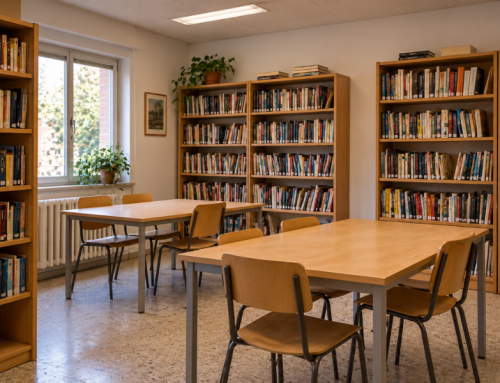
- Study rooms, where you can prepare for exams or work on assignments in a suitable environment.
- Gym, at properties that offer this facility, helping you stay active throughout the academic year.
- Communal kitchen, such as the one at the Barcelona Ciutat Vella residence, providing a shared space for cooking.
- Relaxation and social areas, where you can meet other residents and spend time together outside class.
- Patios and terraces, at certain properties, where you can enjoy outdoor spaces.
In a shared flat, the availability of these spaces depends on the property’s features. In a student residence, however, you may find facilities specifically designed to meet students’ needs.
If you are comparing options, check the features of each Unihabit property to discover which spaces and services it offers and choose the one that best suits your lifestyle.
Privacy and comfort: where will you have more personal space?
Privacy does not depend solely on whether you choose a student residence or a shared flat. The type of room, the layout of the property and the number of people you live with also play a role.
In a shared flat, you can have your own bedroom while sharing the kitchen, bathroom and living room. If you are looking for greater independence, there are also properties with layouts that offer more privacy.
University accommodation offers different options depending on the location. At Unihabit, Barcelona Ciutat Vella is the only residence offering single, double and triple rooms, while in Gràcia, Sant Cugat and Manresa you will find single or double apartments. In Girona, you can also choose loft-style accommodation.
Meanwhile, our accommodation in Gràcia offers apartments with private bedrooms and shared spaces.
If having your own space to relax and study is important to you, explore the available options in our student rooms section.
Before deciding, ask yourself what you really need: would you prefer to live independently, share a room or have a private space within a shared property?
Starting university also means meeting new people, adapting to a new city and building your own social circle.
In a shared flat, your social experience largely depends on your flatmates. You may meet people with similar interests and enjoy a very positive living experience, although everyone may also have different schedules and routines.
A student residence offers more opportunities to connect with other students, as it provides communal spaces and may organise activities for residents.
At Unihabit, shared spaces and social activities encourage interaction between students from different places and degree programmes. What’s more, living alongside a larger number of students than you would in a shared flat gives you more opportunities to meet new people, make friends and expand your social circle throughout the academic year.
This can be particularly helpful if:
- You are starting university and do not know anyone yet.
- You are moving to a new city.
- You are arriving from another country to study.
- You want to expand your social circle outside your classes.
In any case, living in a student residence does not mean you have to take part in every activity. You can also enjoy your free time and maintain your own routine.
Studying and concentration: which accommodation makes academic life easier?
During the academic year, finding a quiet place to study is essential. Assignments, deadlines and exams require organisation and suitable spaces.
In a shared flat, you can study in your bedroom, the living room or a library. Your experience will depend on noise levels, your flatmates’ schedules and the layout of the property.
At our student residences, as well as your room, there are study rooms and communal areas where you can change your surroundings when you need to concentrate.
Unihabit provides dedicated study spaces within its facilities, although it is important to check the features of each property.
When choosing, consider factors such as lighting, desk space, internet access and the possibility of resting without interruptions.
It is also worth checking the distance between your accommodation and your university. Living close to campus can help you save time on commuting and organise your day more efficiently.
Sharing a home means learning how to live with others. For the experience to work well, it is important to agree on cleaning, shopping, visitors and the use of communal spaces.
In a shared flat, these responsibilities are usually divided among flatmates. When routines are compatible and communication is good, sharing a home can be a very positive experience. However, if clear agreements are not established, conflicts may arise.
Student residences also have rules for communal living, but part of the accommodation management is handled by the team responsible for the facilities.
This does not mean that all personal responsibilities disappear. Every resident must respect the rules, look after the facilities and contribute to a positive living environment.
The main difference lies in the support available during your stay and how much you need to manage yourself. In a student residence, there is a designated person who can help you if a problem arises, whether it concerns daily life or living alongside other students.
This makes it easier to find solutions and resolve potential conflicts, whereas in a shared flat, tenants usually have to manage these situations themselves.
Location and transport: how long will it take you to get to class?
Location can affect both your budget and your quality of life. Living far from university can mean longer journeys and additional transport costs.
Before choosing accommodation, check:
- The distance to your faculty or campus.
- Metro, bus or train connections.
- Actual journey times during rush hour.
- The proximity of supermarkets, libraries and other services.
- How easy it is to get back to your accommodation after classes.
Unihabit offers accommodation in different locations across Catalonia, close to university campuses in major cities, allowing you to choose the option that best suits your studies.
In addition, the student residences in Sant Cugat, Girona and Manresa are located right next to the main university campuses in these cities.

University residence Barcelona in Ciutat Vella
An option for those who want to live in central Barcelona, close to various university institutions and with access to public transport.
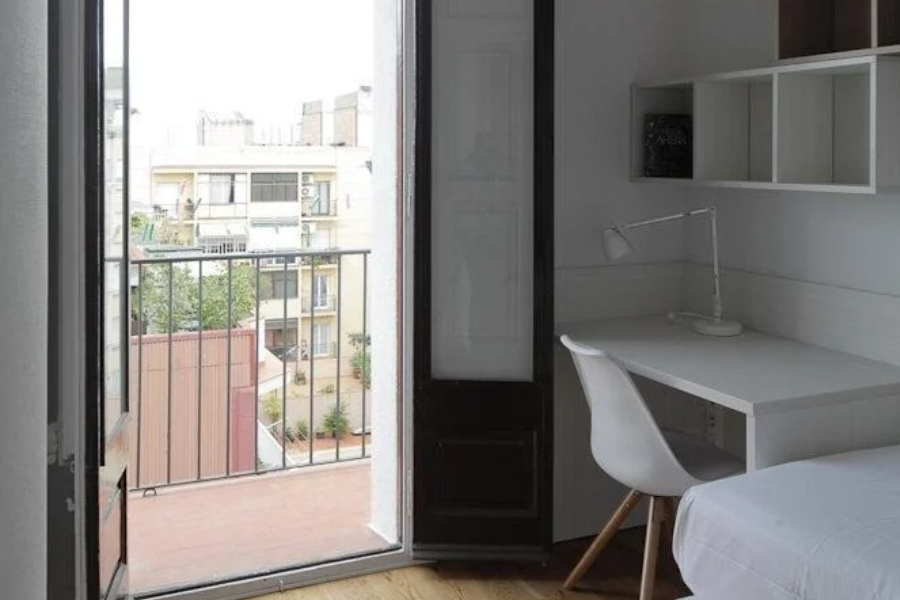
Gràcia university residence in Barcelona
Student apartments in a neighbourhood with shops, squares and public transport connections.
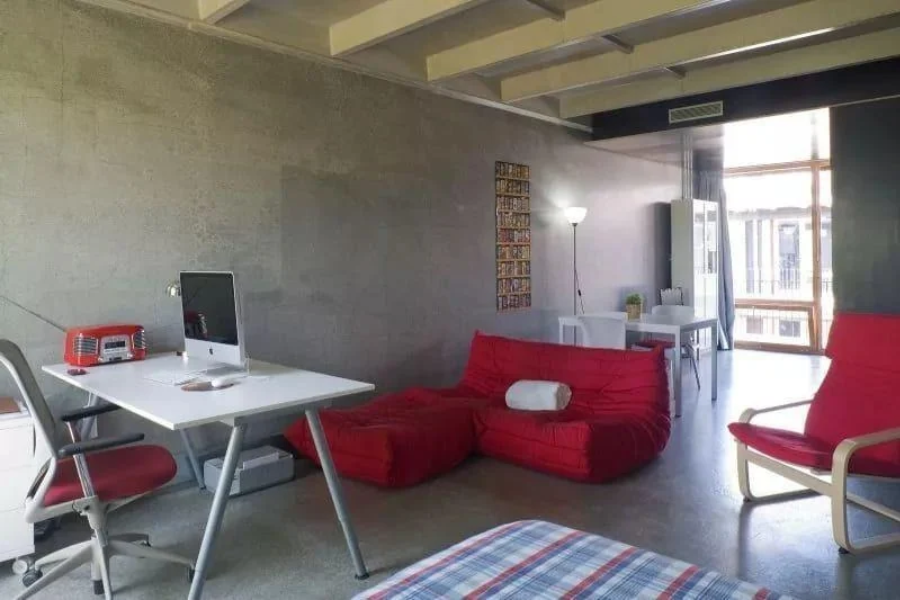
University residence Sant Cugat
The ideal solution for students looking for accommodation connected to the university environment in Sant Cugat.

University residence Girona – Campus Montilivi
An option for students studying in Girona who want to live close to their university.
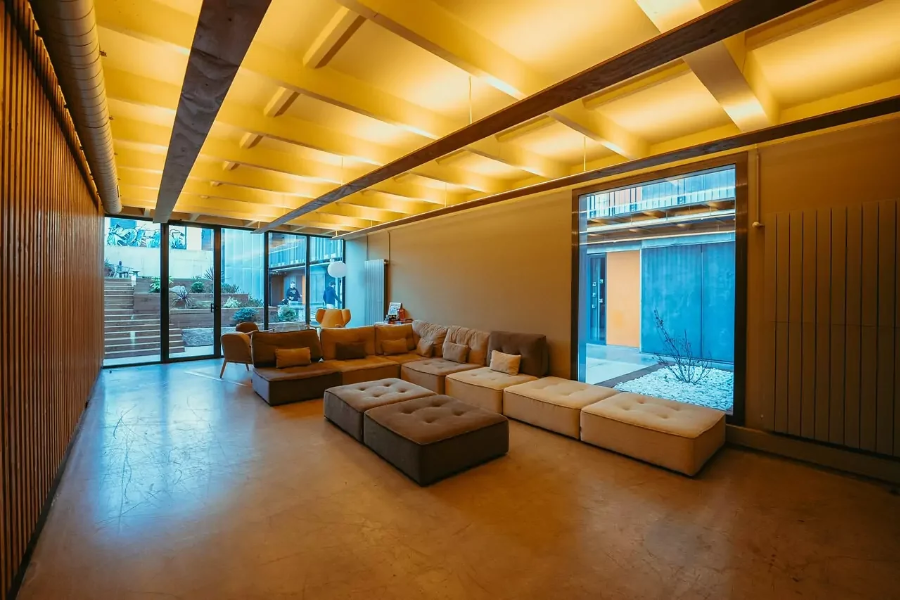
The ideal option for students studying in Manresa who prefer to live in the same city and close to their faculties.
Check the information for each property on the official Unihabit website to compare facilities, availability and conditions.
Which option is best for your student profile?
There is no single answer that works for everyone. The best choice depends on your personal circumstances, priorities and how you want to experience university life.
A student residence may be right for you if…
- It is your first year living away from home.
- You are moving to a city where you do not know anyone yet.
- You want certain services included in your accommodation fee.
- You value having access to study areas and communal spaces.
- You prefer to reduce some of your household management responsibilities.
A shared flat may be right for you if…
- You want to organise your home together with your flatmates.
- You prefer to choose a specific property and its layout.
- You find an option whose total cost fits your budget.
- You value the independence that comes with sharing a home outside a student residence.
There is also a middle-ground option: student apartments, which combine private rooms with certain shared spaces. This type of accommodation, available at Unihabit’s residences in Girona, Manresa and Sant Cugat, may appeal to you if you are looking for an experience closer to living in a flat while still enjoying accommodation designed for the university community.
Why choose Unihabit for your university years?
Finding accommodation is not just about booking a room. It also means choosing the environment where you will study, relax and live during an important stage of your life.
Unihabit offers different types of university accommodation across Catalonia, with options in Barcelona, Sant Cugat, Girona and Manresa. Depending on the residence, you can find different types of apartments, communal spaces and services designed to make everyday life easier.
Location, accommodation type and available services are all factors worth comparing before booking.
If you want to explore the available options, take a look at Unihabit’s student residences and accommodation. This will help you find the option that best suits your studies, needs and budget.
Choosing the right place to live can help you make the most of university, find your own rhythm and enjoy this new chapter from day one.
It depends on each student’s needs. A student residence can make settling in easier thanks to its services and communal spaces, while a shared flat may offer a more independent experience. If you are moving to a new city, also consider the opportunities to meet people and how easy it will be to organise your daily life.
Can I have visitors if I live in a student residence?
It depends on the rules of each residence. Before confirming your booking, check the visitor policy, visiting hours and access conditions for guests.
What should I bring when moving into a student residence?
It depends on what the accommodation provides. Check whether bed linen, towels, kitchen utensils and other essentials are included. Then prepare a list of clothes, study materials, personal care products and anything else you need to feel at home. Check our checklist of everything you need to bring when moving into a student residence.
How can I know if a student residence has good transport links to my university?
Check the exact address of the accommodation and calculate the journey to your faculty using public transport. Take into account any changes, service frequency and journey times during your usual class hours.